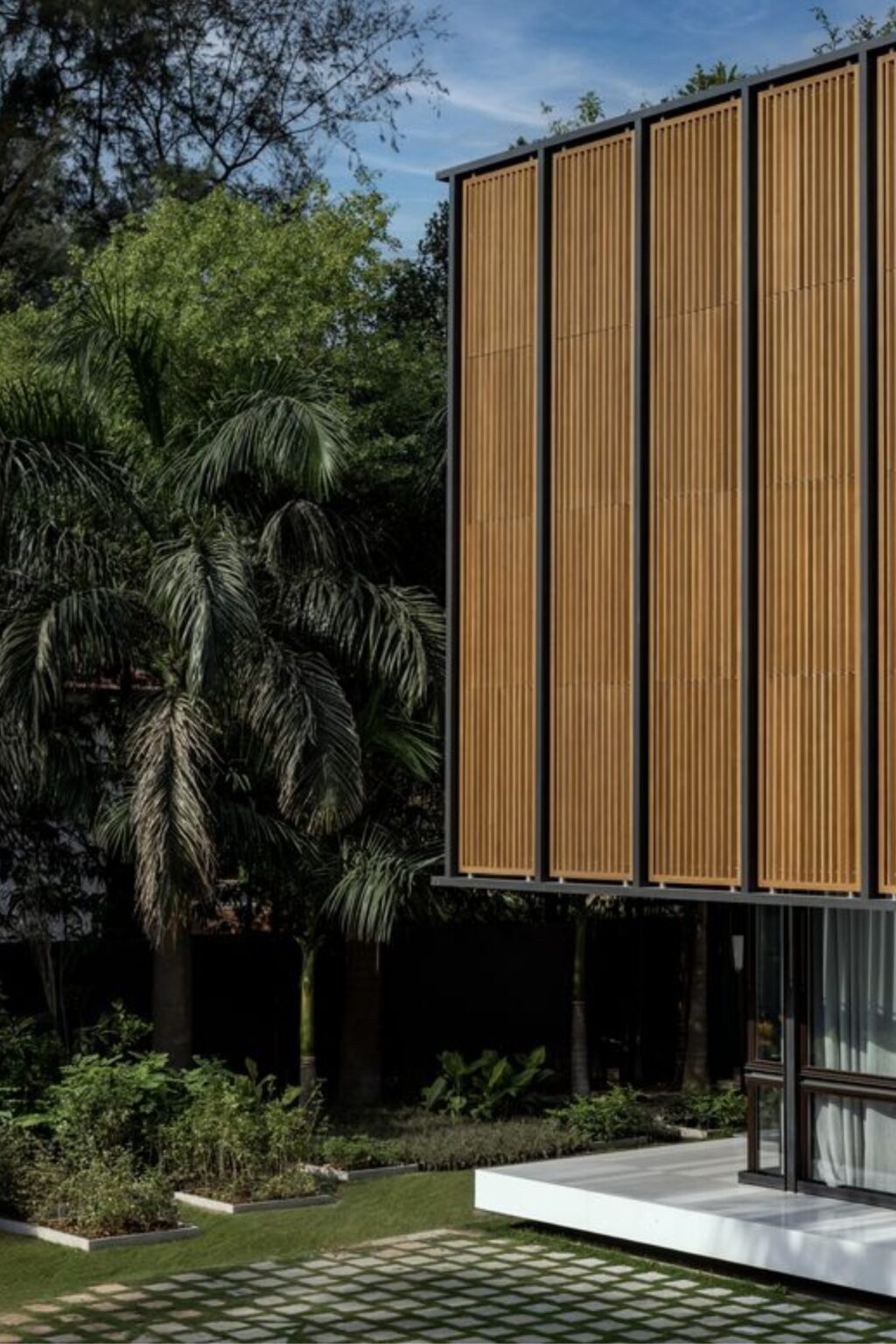
Designed for a family of three and their dog, the Lighthouse residence is nestled within a one-acre farmland plot. Departing from the traditional approach of placing a home at the centre of the plot, the layout positions a large landscaped lawn at the heart of the living experience, framed by the primary residence and an outhouse on adjoining sides. The entrance guides visitors into the court, flanked by the two built forms, revealing the contrasting scales between them while setting the lawn at centre stage.
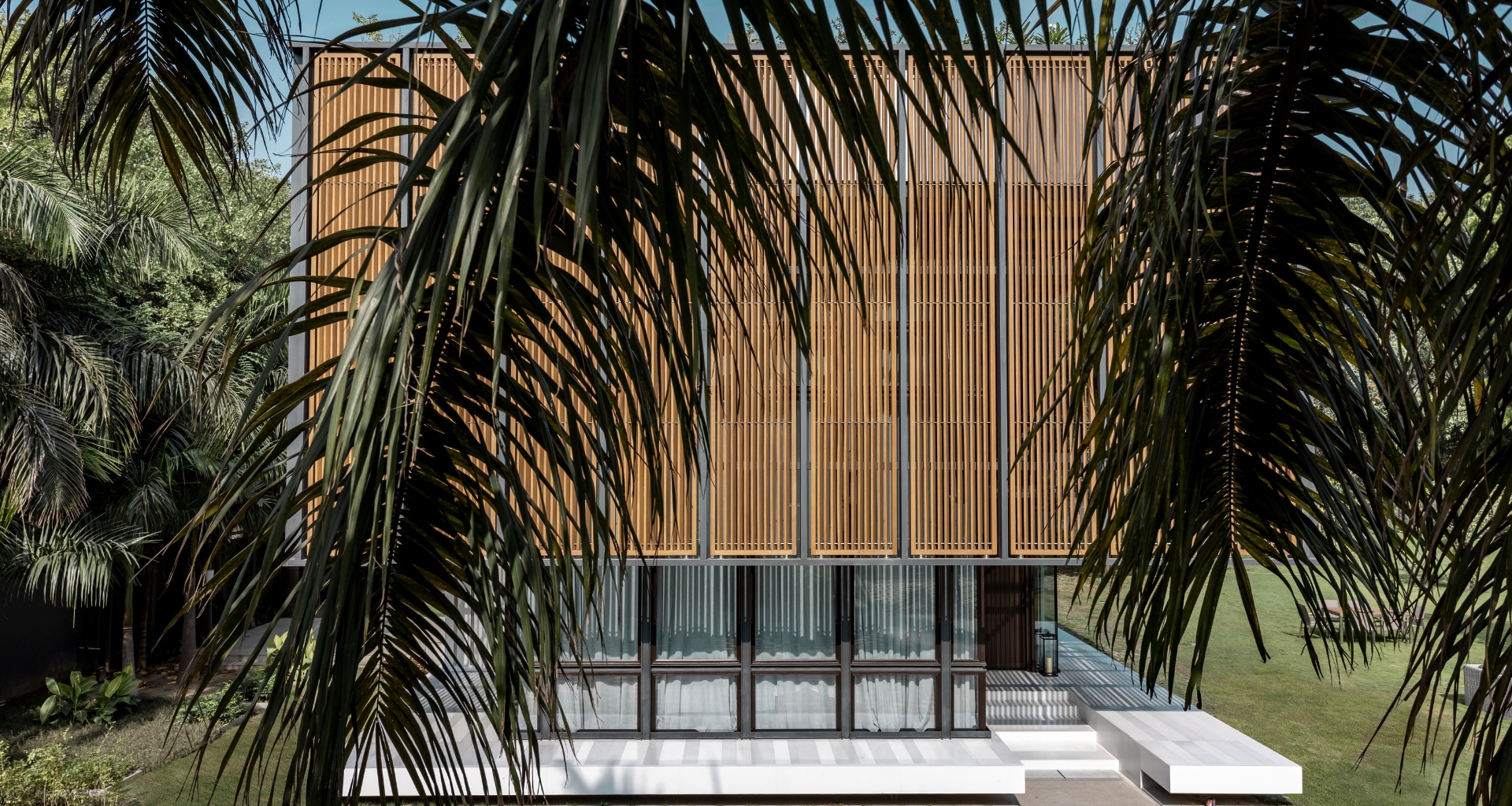
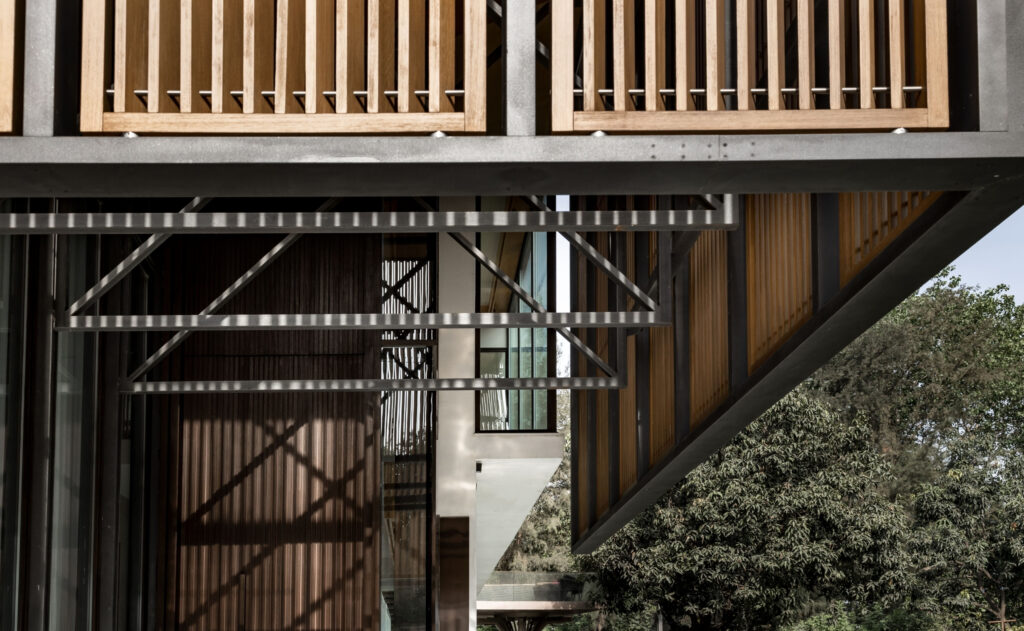
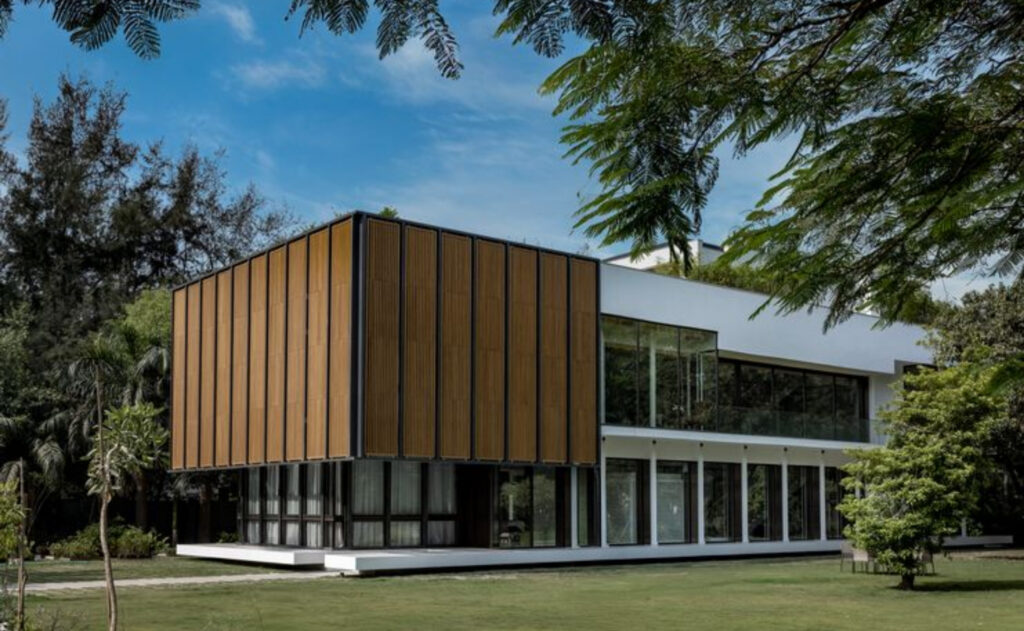
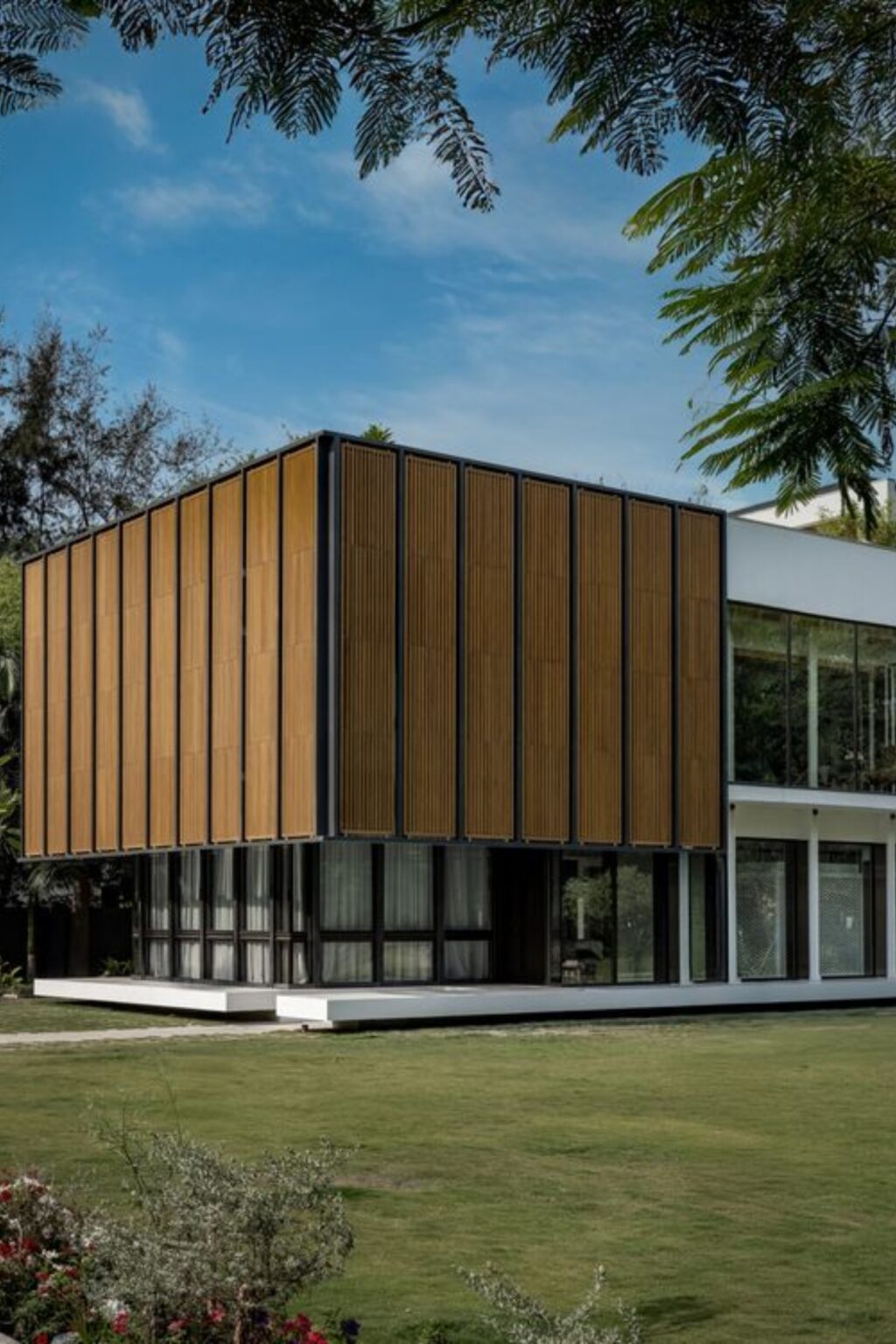
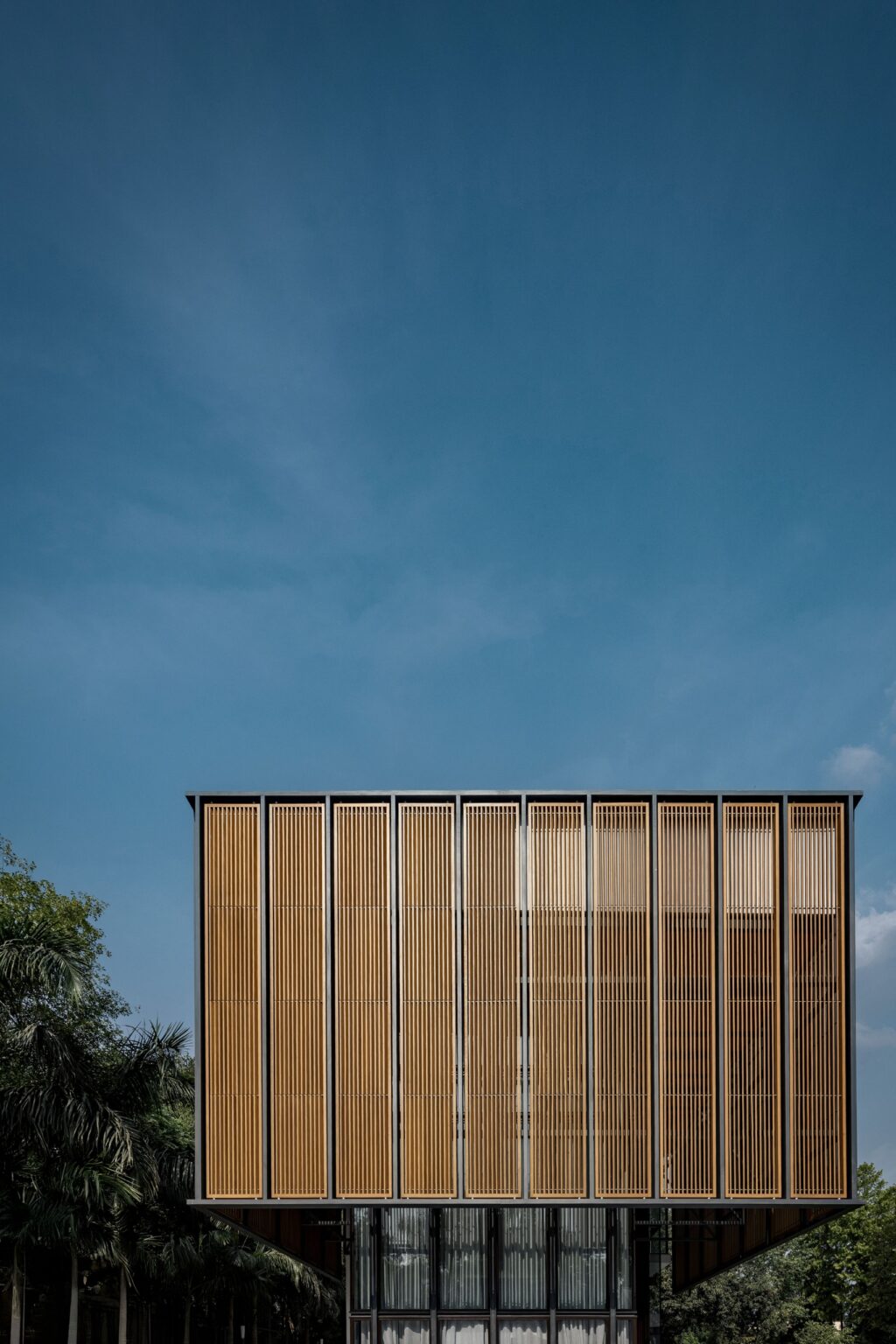
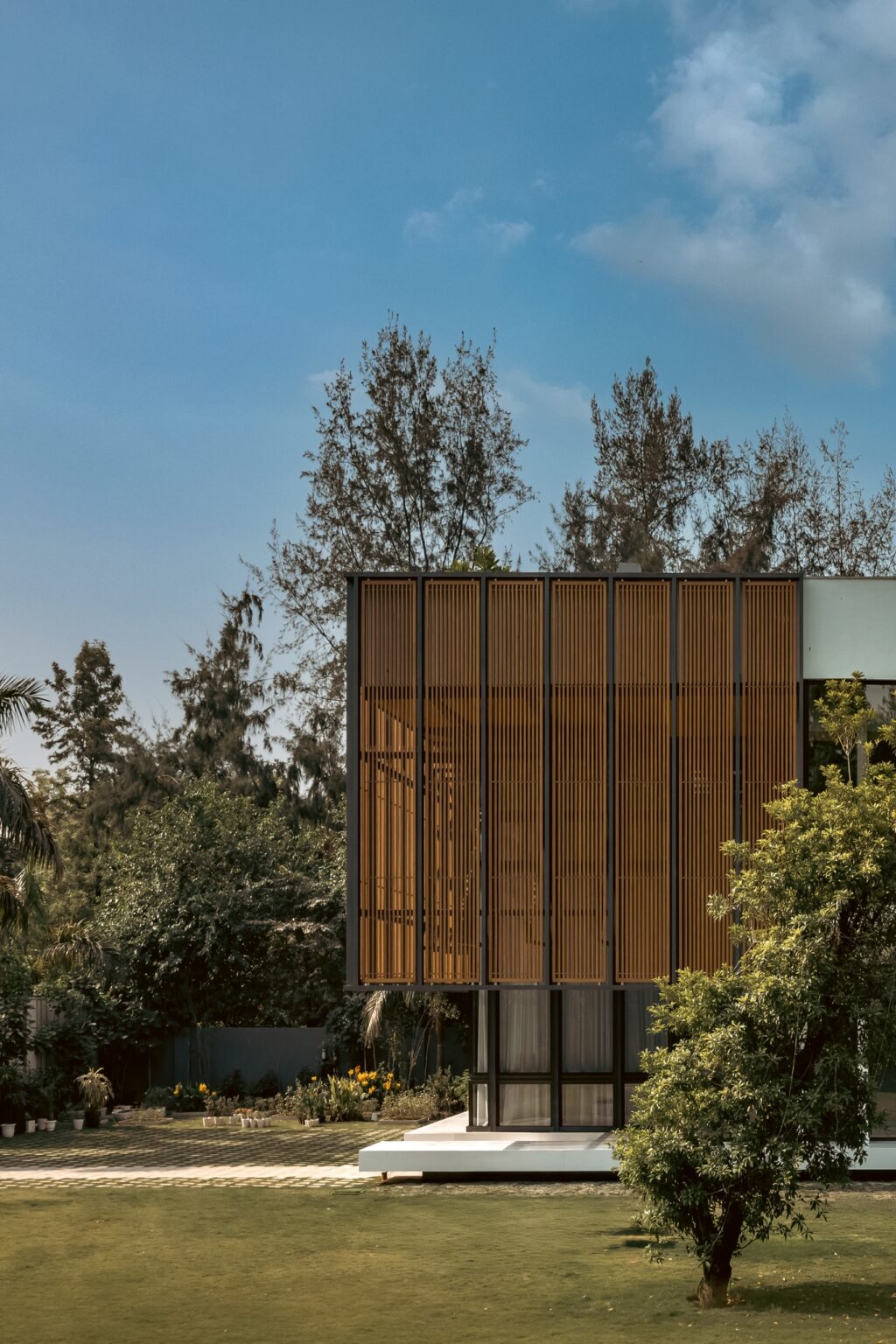
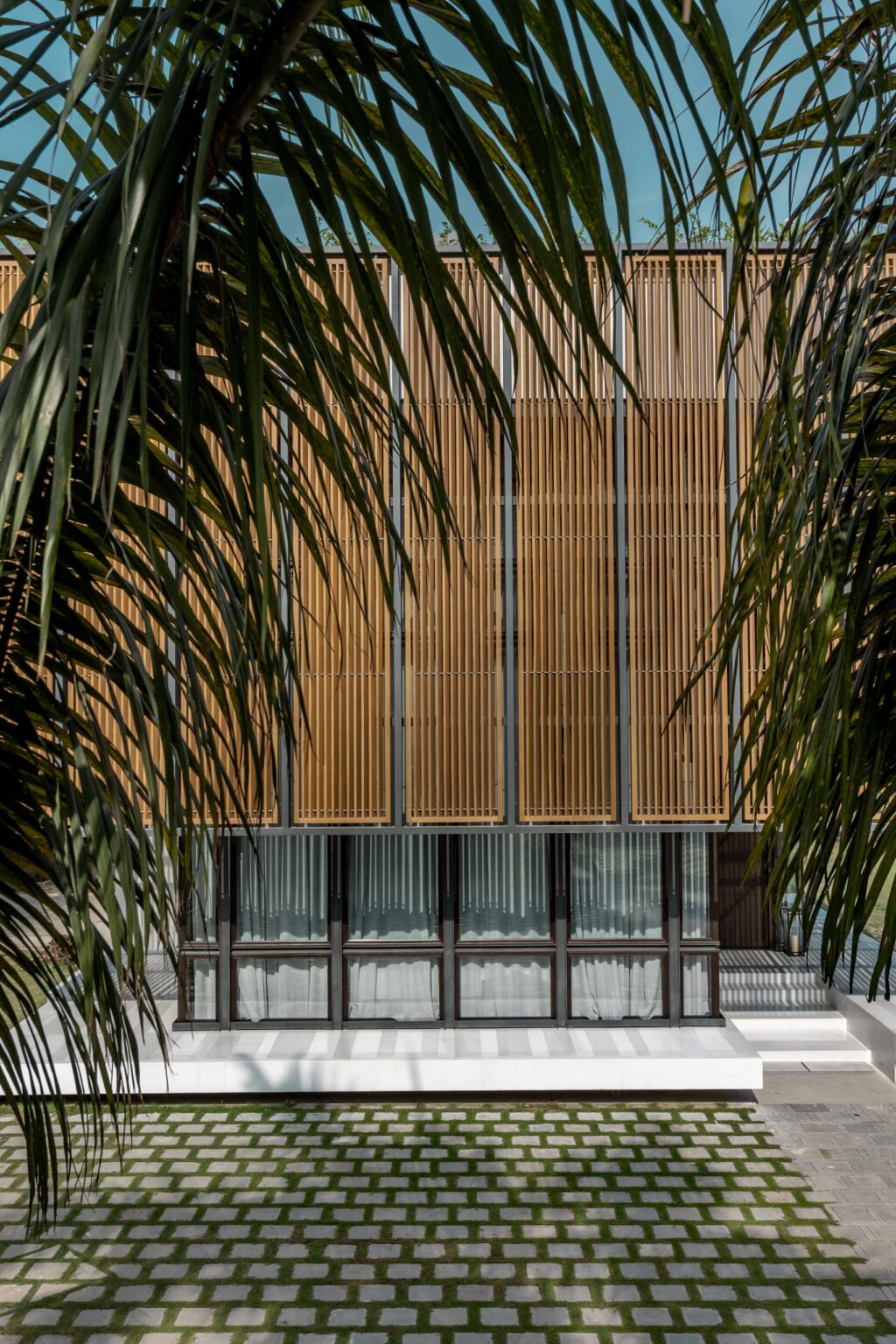
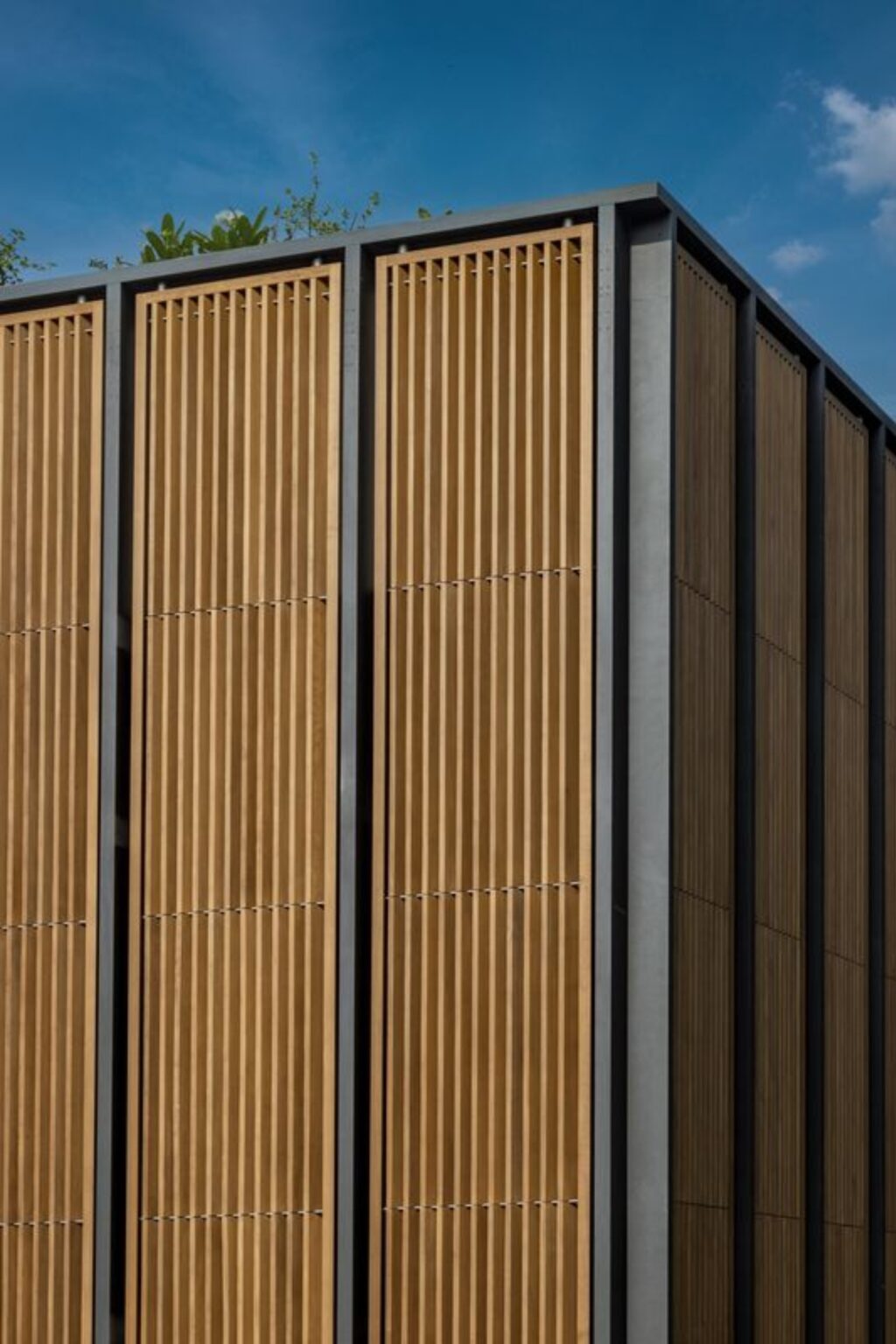
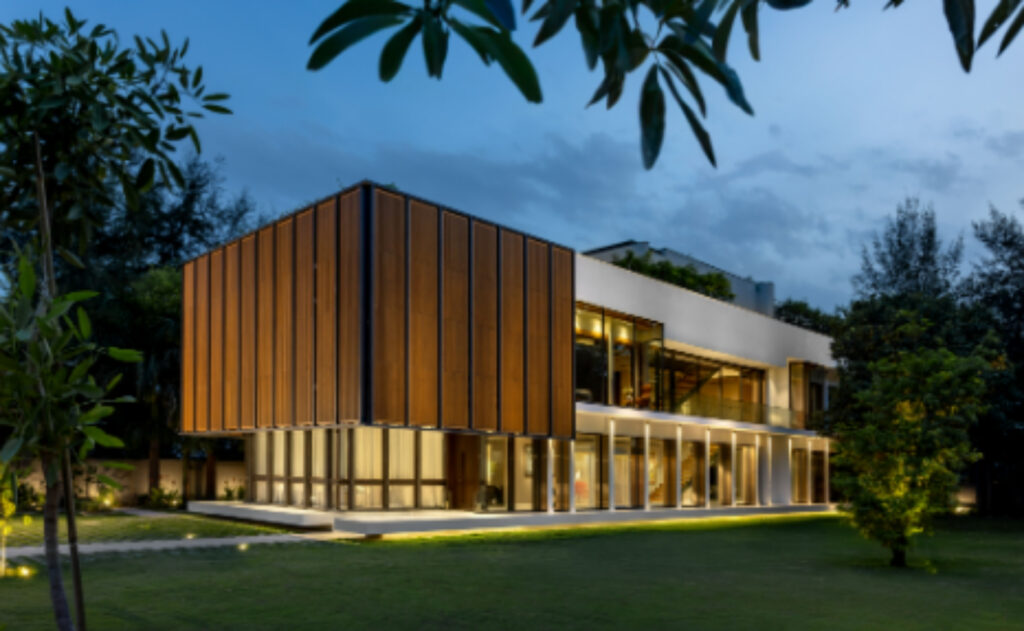
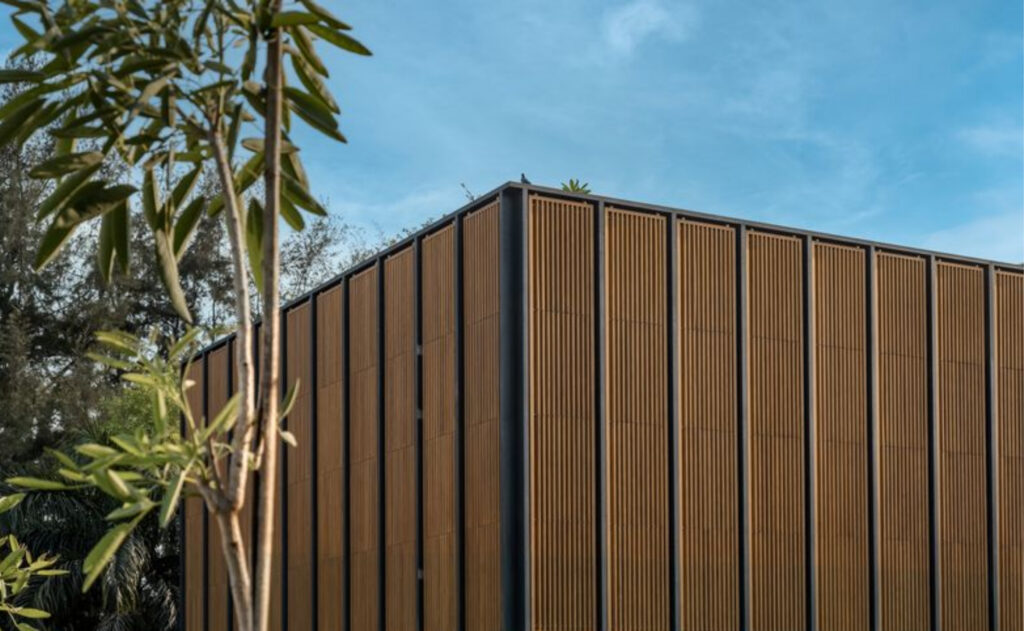
The residence makes a striking first impression with a rhythmic timber screen lightly suspended over a glass box that houses a double-height living space. One accesses the home through steps that lead up to its floating plinth, featuring a monumental 22-ft high solid-wood entrance door that opens into the interior. The façade features prefabricated wooden louvre systems crafted from Yellow Cedar, providing a layer of warmth, texture, and timeless appeal, offering privacy, light modulation, and architectural character. The entrance door and slim-section louvre screens have been engineered with glulam to prevent warping, expansion, or contraction, allowing for minimal movement and a perfect fit on site. Additionally, operable glulam screens shield the living space from heat and glare while facilitating connection with the environment in varying degrees. These screens can also be removed in winter, creating an uninterrupted connection to the outdoors.
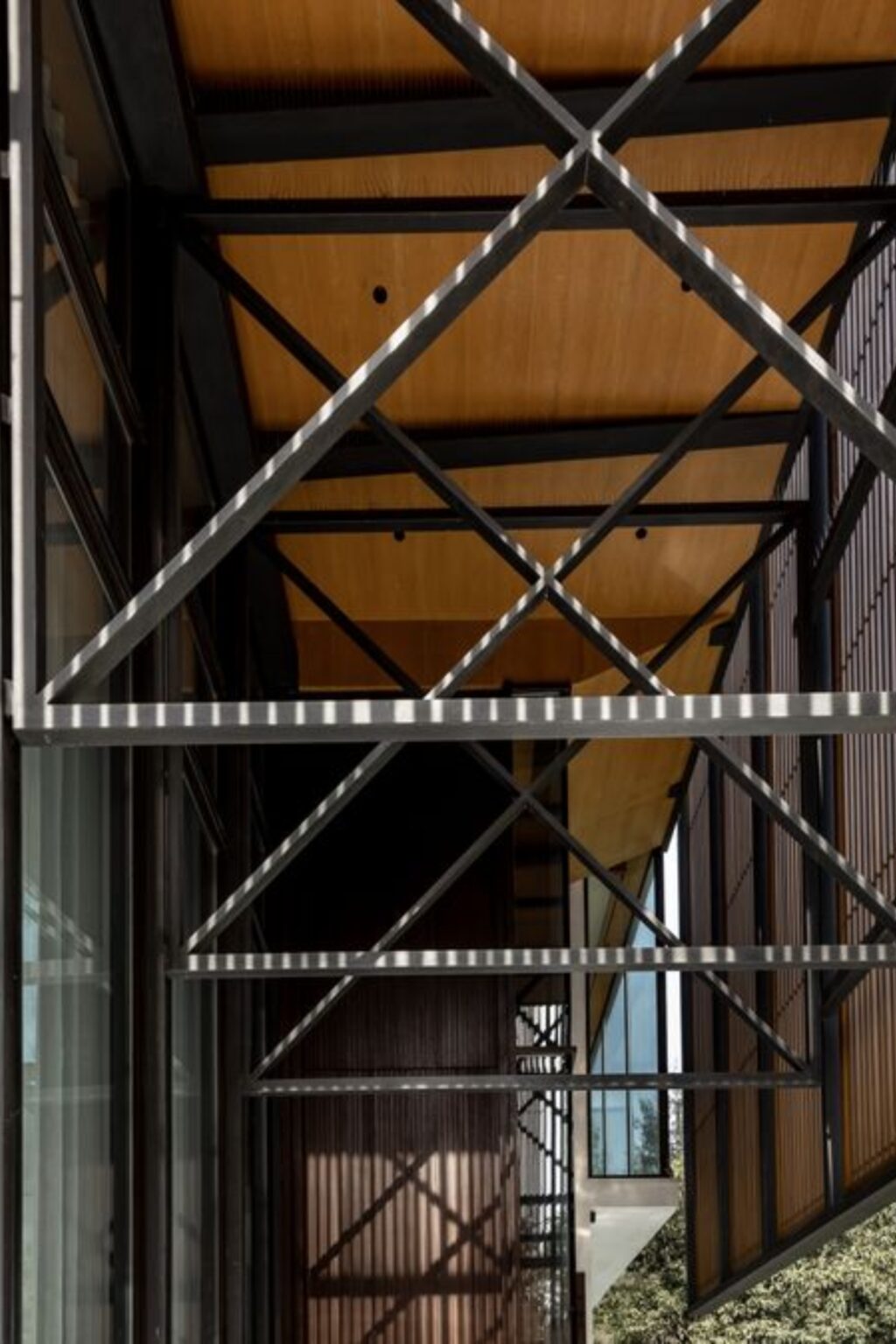
Artius’ glued-laminated timber (glulam) technology is seamlessly integrated into the architectural language of the home. As a carbon-negative material, glulam sequesters carbon during production while offering structural strength. Prefabricated with precision by Artius, the glulam sections—crafted from ultra-durable, termite-resistant Yellow Cedar—were installed on-site to enable the creation of screens from thin, lightweight sections. In line with the intent of sustainability, the home itself is assembled like a Meccano kit, using precast concrete columns, beams, and slabs that keep disruptions to the site and material wastage to an absolute minimum.
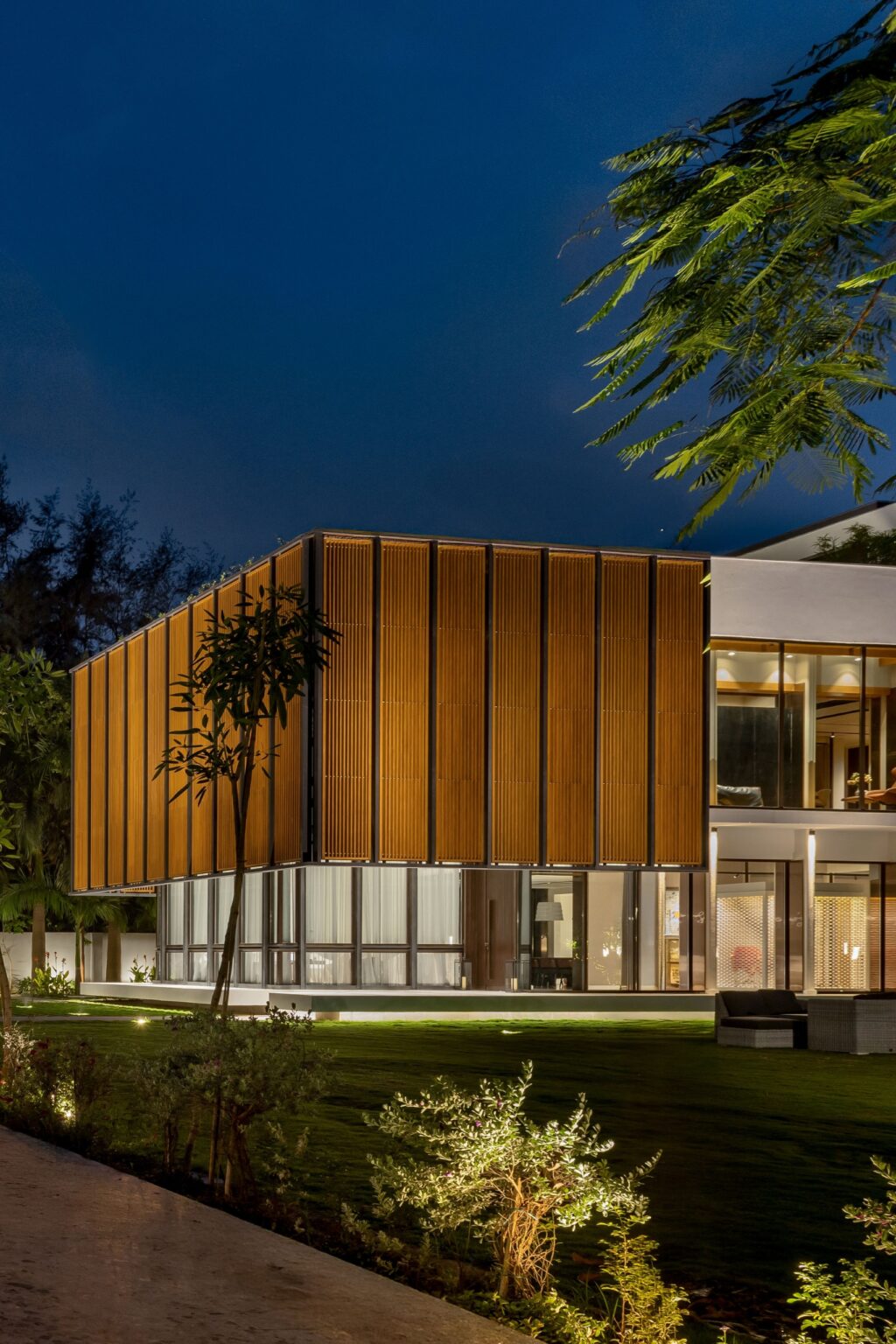
Named Lighthouse owing to the home’s unique handling of daylight as a building material, the home’s living space is flooded with natural light streaming through the timber screens and is further augmented by a central skylight resembling a chimney stack. A floating lenticular ceiling adds drama, functioning as a modern interpretation of a chandelier. When illuminated at night, the form of the building, with its timber screens, appears as a suspended, internally lit lantern within its landscape.
The home’s ground floor features its shared spaces, including a living area, an open kitchen, a guest bedroom, and a lounge area that extends onto a deck with a water feature and a meditation space, all seamlessly connected to the central green. The first floor, accessed via a sculptural single-flight staircase that skirts the home’s green edge, houses the private quarters. These spaces are oriented to maximise connection to the outdoors, also featuring a projecting balcony that breaks the linearity of the facade and extends into the canopy of a mango tree. The home’s length is an ordered composition of openings, closely bridging the divide between indoors and outdoors.
The initial client brief evolved to include an outhouse that functions as a transitional space or retreat, serving both as a venue for entertainment and a secluded escape for the family. Originally designed as a buffer between the parking area and the central court, and as an antechamber to the pool, it quickly evolved into something far more layered. It serves as a multifunctional retreat, ideal for entertainment or quiet reflection, and becomes a venue for intimate gatherings, casual lounging, and unwinding, providing a contrast in energy to the main house.
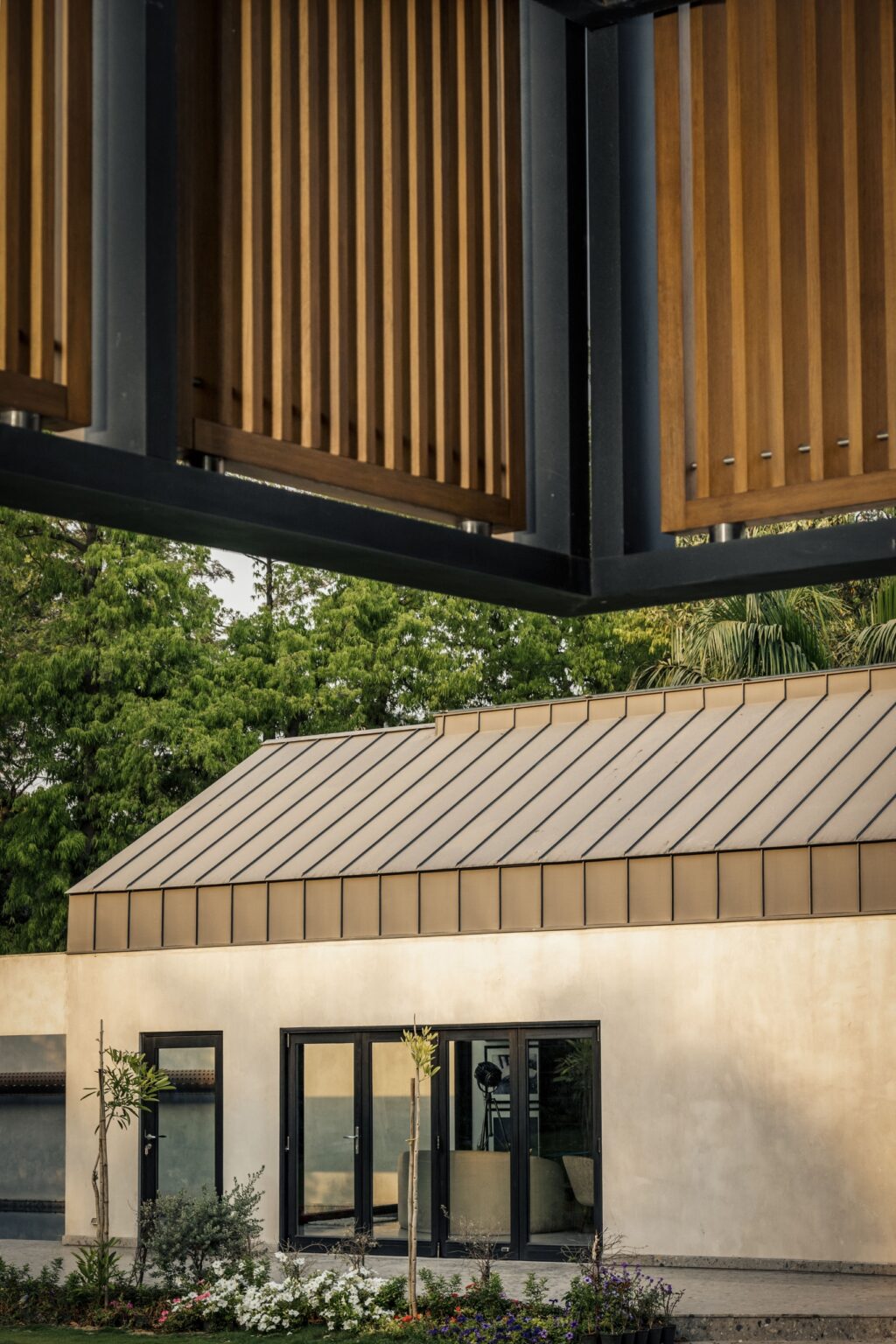
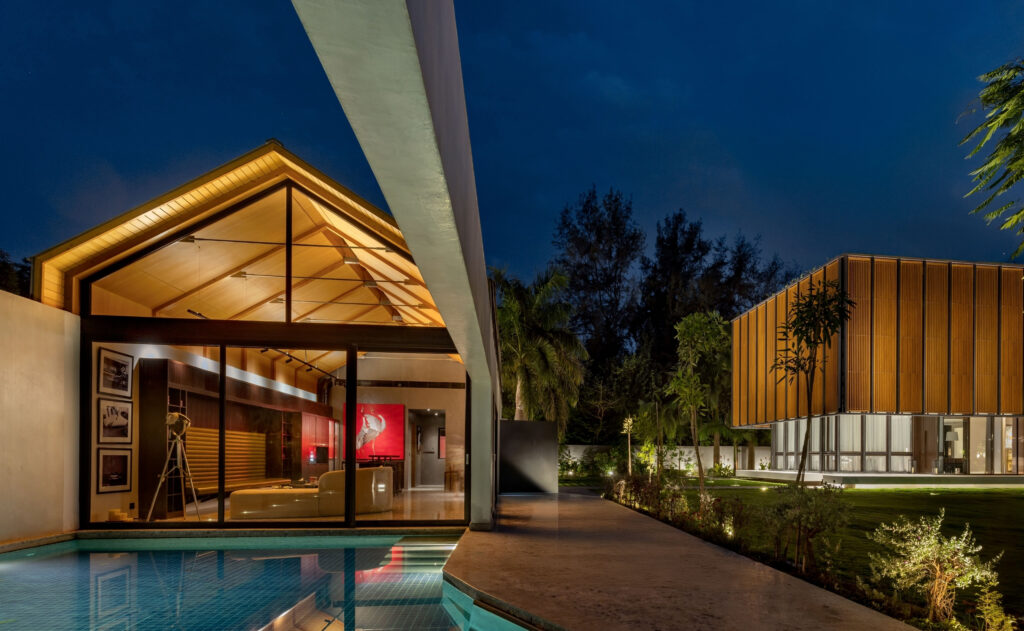
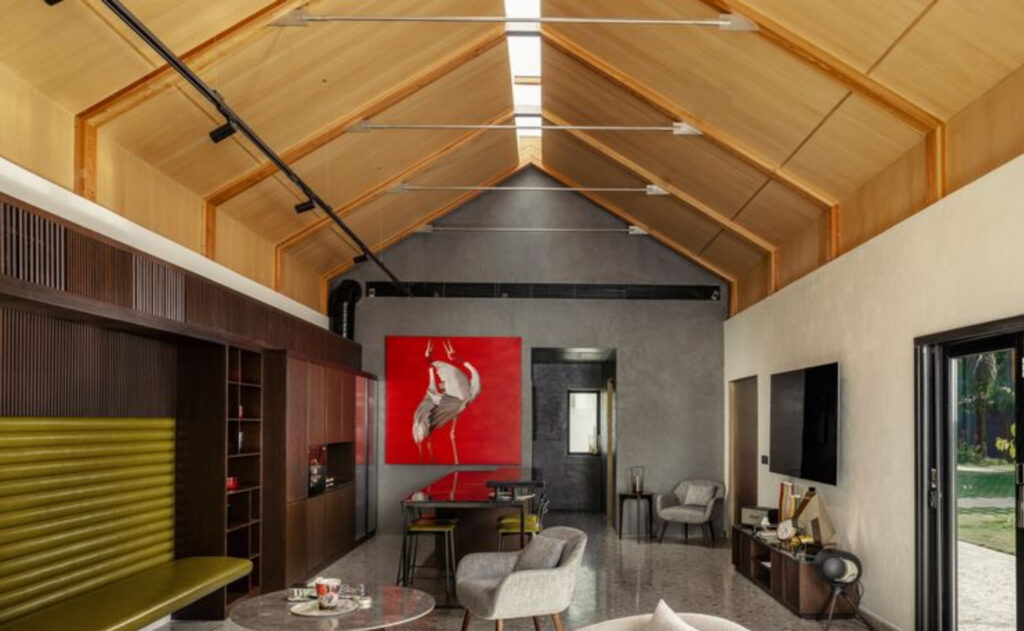
The form of the outhouse strikes a balance between permanence and lightness, with a unidirectional layout leading to the swimming pool, grounded in concrete and featuring a light zinc roof, topped with the Artius Glulam Timber Roofing System, crafted from premium Yellow Cedar. Prefabricated off-site at Artius’s state-of-the-art facility in Gurugram and assembled in just 45 days by a crew of seven, this zero-waste, eco-conscious solution demonstrates the speed, sustainability, and structural potential of mass timber in the Indian context.
A linear skylight runs along the ridge of the pitched roof, filling the space with natural light through generous glass openings. The design features a mix of lift-and-slide and slide-and-fold doors, opening up the entire space to the outdoors and offering expansive views of the garden and beyond. Its monochrome interiors, featuring grey terrazzo flooring and minimal furniture, exude a modern, playful charm, enhancing the sense of openness while unfolding with an intuitive sense of movement. Large openings connect the space to the surrounding green areas, allowing it to transform into an expansive entertainment area. Like the main house, this space is designed for optimism, connection, and the quiet luxury of time well spent.
Lighthouse is a home where nature’s elements—light, air, and landscape—are integral to both its design and experience. Crafted with the warmth of timber and the enduring strength of Glulam, the residence stands as a timeless ode to nature, gracefully evolving with the play of light and the passage of time. By crafting the design around these elements, the home redefines urban living by immersing itself in its setting.